A 22% no-show rate is not an accounting problem. It is an identity problem: the practice believes its day is full, then discovers at 10:40 AM that it is not. This is the story of a 3-chair family practice in Austin that stopped believing a calendar it could not trust, rebuilt patient reminders in 90 days, and pulled its no-show rate down to 4.3%.
Composite case study based on typical DodoDentist deployments. Numbers are illustrative of results practices in this demographic commonly see during the first 90 days.
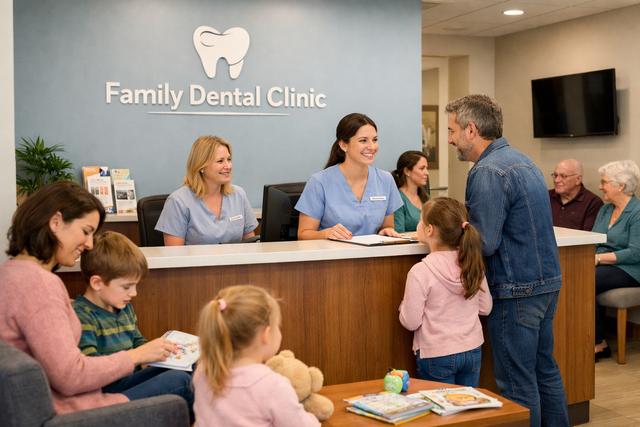
The clinic: a 3-chair family practice in Austin, TX
Three operatories, two dentists, one hygienist, and a full-time front-desk lead. Roughly 2,100 active patients on the books. About 30% of the patient base is Spanish-speaking — a detail that turned out to matter more than anyone expected. Average production per chair-hour sat at $180, which put the opportunity cost of every empty slot between $90 and $360 depending on the procedure.
The baseline: a 22% no-show rate measured across 12 months of scheduling data. Reminders were handled by the front desk with phone calls the day before, supplemented by a legacy email reminder from the practice management system. Nobody loved the setup; nobody had time to replace it.
If you want the broader context on what that kind of no-show rate costs a practice, we broke it down in real cost of dental no-shows.
Week 1–2: audit, CSV import, first SMS cadence live
The first two weeks were diagnostic, not heroic. The front-desk lead pulled a 12-month appointment export and tagged every missed appointment with a reason code: forgot, scheduling conflict, transportation, financial, other. Forgotten appointments were 61% of no-shows. That single number rewrote the priority order.
With SMS appointment reminders in place, the team imported the patient list via CSV in an afternoon and wired up a first SMS appointment reminders cadence: one text 7 days out, one 48 hours out, one 2 hours out. No branching logic yet, no two-way replies — just three outbound messages per appointment.
Two weeks in, no-shows dropped from 22% to 14.8%. The entire gain came from the 48-hour reminder. The 7-day message was too early for this demographic; patients marked it as read and moved on. The 2-hour reminder helped patients who were running late but rarely prevented a true no-show.
Week 3–6: adding WhatsApp for the bilingual patient base
With a third of the patient list preferring Spanish, the clinic started asking during intake which channel patients wanted. The answer was not what anyone predicted: 64% of Spanish-speaking patients chose WhatsApp over SMS, compared with 22% of English-speaking patients. The reason was simple — WhatsApp was already how they coordinated with family.
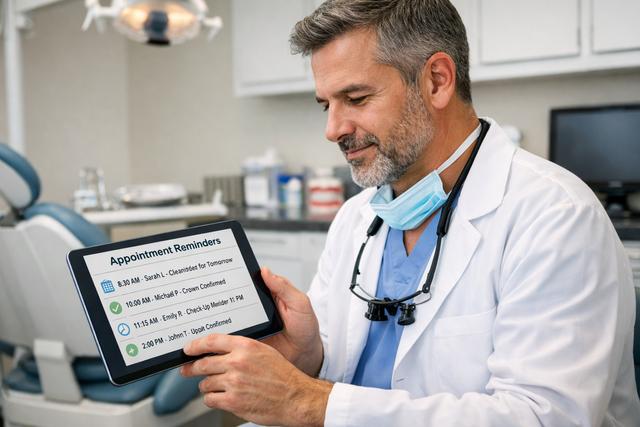
The clinic turned on WhatsApp appointment reminders for dentists in week 3 and migrated the opted-in patients over. Two things happened. First, read rates for that segment jumped from 71% (SMS) to 96% (WhatsApp). Second, reply rates jumped even more dramatically — patients were nine times more likely to respond to a WhatsApp message than an SMS, which mattered enormously for the two-way confirmation flow that came next.
Net no-show rate at the end of week 6: 9.1%.
Week 7–10: two-way confirmations and auto-recall
This is the phase that moved the needle the most, and it is the one most practices skip.
Two-way confirmation means the 48-hour reminder asks a question: "Reply YES to confirm or NO to reschedule." An automated response then either marks the appointment as confirmed in the schedule or triggers a workflow to re-book.
For this clinic, the confirmation reply rate averaged 78% within six hours. Of the patients who replied NO, 84% rescheduled within the same conversation. Of the patients who did not reply at all, the front desk made a targeted phone call the morning of — a tiny, manageable list compared with the old practice of cold-calling every patient every day.
Alongside two-way confirmations, the team switched on auto-recall: patients overdue for their 6-month hygiene visit got a WhatsApp or SMS prompt on day 180 with a direct rebooking link. In the four weeks of weeks 7–10, auto-recall pulled 47 overdue patients back into the chair. Several of them had not been seen in over a year.
Day 90 results: 22% → 4.3% no-show rate, $14k monthly revenue recovery
At the end of 90 days, the scorecard looked like this:
- No-show rate: 22% → 4.3% (an 80% relative reduction)
- Recovered monthly revenue: approximately $14,000, based on the filled chair-hours at the clinic average of $180
- Front-desk time saved on reminder calls: 9.5 hours per week
- Hygiene recall rate: 61% → 83%
- Patient satisfaction (post-visit survey): up 12 percentage points, with specific mentions of "easier to confirm" and "liked getting messages in Spanish"
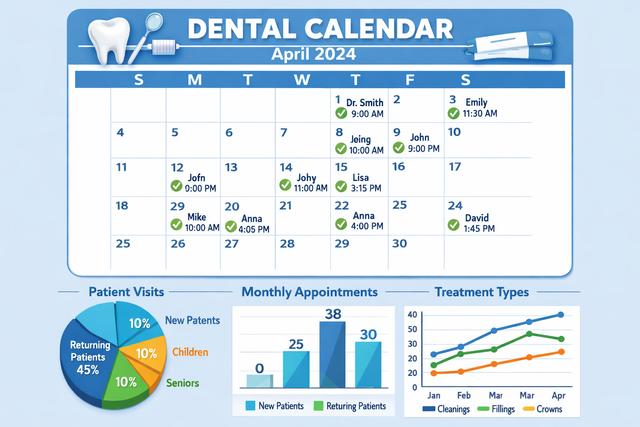
The revenue number is worth a second look. $14k a month is $168k annualized against a software cost in the low four figures. That is the math that made this a no-brainer to keep running — and the math that should make any similar-sized practice take a hard look at their own reminder setup.
What didnt work (honest section)
Not every experiment in the 90 days moved the number. Some actively hurt it.
- Email reminders: In this patient demographic, email was effectively invisible. Open rates hovered at 18%, and no measurable no-show reduction could be attributed to the email channel. The clinic stopped sending email reminders in week 5.
- A 3-day-out reminder: The team tried inserting a reminder 3 days before the appointment, thinking it would help patients plan. It produced an uptick in "I need to reschedule" replies that were not incremental — the same patients would have cancelled anyway — and it crossed into "too many messages" territory for patients who also got the 48-hour and 2-hour prompts. Removed by week 7.
- Birthday promotional messages: Added in week 4 as a "delight" touch. Patients were polite about it but several replied asking to stop. Lesson: appointment channels and marketing channels should be separated, not stacked.
- Overly cheerful copy: The initial SMS template used exclamation points and the phrase "We cant wait to see you!" Response rates went up by ~6% after the clinic switched to plain, businesslike wording.
For more tactics that did and didnt work across other practices, we recommend reading 10 ways to reduce patient no-shows.
Replicating this in your own practice: the 90-day playbook
If your no-show rate is above 10% and you want to run the same playbook, here is the condensed version.
Weeks 1–2: measure and seed.
- Export 12 months of appointment data and tag every no-show with a reason code
- Import your active patient list into a reminder system
- Turn on a 48-hour SMS reminder — nothing else yet
- Measure the drop for two weeks before changing anything
Weeks 3–6: match the channel to the patient.
- Ask new and returning patients at intake which channel they prefer
- Offer WhatsApp to any segment where it is the dominant personal messaging app
- Localize the message text, not just translate it — bilingual patients notice the difference
- Drop any channel whose read rate is below 50%
Weeks 7–10: close the loop.
- Switch the 48-hour reminder to two-way confirmation (YES / NO)
- Automate the NO path into a rebooking link
- Only escalate non-responders to a phone call — that is the one place the front desk still adds human judgment
- Turn on auto-recall for overdue hygiene patients
Weeks 11–13: tune and trim.
- Remove any reminder that is not moving your numbers — more messages is not better
- Review the monthly report: no-show rate, recall rate, recovered revenue
- Decide the cadence you will keep for the next 12 months and write it down so it outlasts staff turnover
Ninety days is not a long time. Most of the gains show up in the first 30 if you prioritize the 48-hour reminder and two-way confirmation. Everything after that is optimization.
Run the same 90-day playbook. Start DodoDentist free — import in 5 minutes.